
Understanding Suppressor Technology: What Every Firearms Dealer Should Know to Answer Customer Questions
There is no question that suppressors have become an increasingly important category in the firearms industry. What was once considered a specialty product for a relatively small group of enthusiasts is now drawing attention from hunters, recreational shooters, competitive shooters, and everyday firearm owners.
For firearms dealers, this presents an interesting opportunity. However, selling suppressors involves more than displaying a few models in a glass case and waiting for customers to make a purchase.
One of the biggest obstacles facing first-time suppressor buyers is simply a lack of understanding about how these products work. Customers want to know why one suppressor costs $500 while another costs more than $1,000. They want to understand why one manufacturer promotes a traditional baffle design while another emphasizes flow-through technology. They also want to know whether a suppressor will work with firearms they already own.
A dealer who can confidently answer these questions is in a much better position to provide a positive customer experience.
Let’s look inside the suppressor, explore some of the technology manufacturers are using today, and discuss how dealers can better educate customers who are considering their first purchase.
Understanding the Fundamentals: How Does a Suppressor Actually Work?
Before discussing different brands and designs, dealers should be comfortable explaining the basic operating principles of a suppressor.
When a firearm is discharged, burning propellant creates rapidly expanding gases that propel the bullet through the barrel. As the projectile exits the muzzle, those high-pressure gases escape into the atmosphere, creating the familiar muzzle blast.
A suppressor is designed to reduce that muzzle blast by managing the expansion and release of those gases.
Inside a conventional suppressor, a series of internal chambers and baffles influence how the gases expand, mix, and ultimately exit the device.
The result is a reduction in the intensity of the muzzle blast.
However, one of the first things a dealer should explain is that a suppressor does not make a firearm silent.
There are three primary sources of sound associated with firing a gun:
- Muzzle blast: The sound produced by high-pressure gases escaping the barrel.
- Ballistic shock wave: The sonic crack produced when a projectile travels faster than the speed of sound.
- Mechanical noise: The sound of the firearm’s action cycling, including the bolt, slide, and other moving components.
A suppressor primarily addresses muzzle blast. It does not eliminate the sonic crack of supersonic ammunition or the mechanical noise of the firearm.
This is particularly important when discussing ammunition choices with customers.
For example, a customer shooting supersonic .308 Winchester ammunition through a suppressed rifle should not expect the same sound signature as a firearm using suitable subsonic ammunition.
Understanding Suppressor Anatomy: What Is Inside?
Most conventional suppressors contain several recognizable components, although the exact construction varies by manufacturer.
The outer housing provides structural support and contains the internal gas-management system. Depending on the product, manufacturers may use stainless steel, titanium, aluminum, or specialized alloys.
The mounting system connects the suppressor to the firearm. Direct-thread and quick-detach systems are common, while certain pistol suppressors require a recoil-assisting assembly.
Inside the suppressor are the chambers, baffles, or other gas-management structures responsible for influencing the release of propellant gases.
Finally, the front end cap provides an exit opening for the projectile.
Figure 2. Basic suppressor anatomy. Some modern suppressors replace conventional baffle stacks with integrated or alternative gas-management structures.
A common customer question is whether a suppressor can be taken apart for cleaning.
The answer depends on the model.
Many rimfire suppressors are designed to be user-serviceable because .22 LR ammunition can leave significant lead and carbon deposits. Other suppressors, particularly certain centerfire rifle models, are sealed units that are not intended to be disassembled by the owner.
Dealers should always direct customers to the manufacturer’s specific maintenance instructions rather than assuming all suppressors are cleaned the same way.
Understanding Different Baffle Technologies
One of the most useful things a dealer can learn is that not all suppressors manage gas in the same manner.
Manufacturers have developed a variety of internal designs, each with different advantages and trade-offs.
Traditional cone-style baffles
Cone-style baffles have been used in conventional suppressors for many years.
Their internal geometry influences how propellant gases expand and move through a series of chambers. These designs remain common because they can provide an effective balance of sound reduction, durability, and manufacturing practicality.
K-baffle designs
K-style baffles are another established approach, historically associated with certain pistol and rimfire suppressors.
Their chamber arrangements differ from conventional cone designs, influencing how gases circulate and expand within the suppressor.
Some K-baffle systems are used in suppressors that owners can disassemble for cleaning, making serviceability an important selling point in appropriate applications.
Monocore designs
A monocore suppressor uses a single integrated internal structure rather than a collection of separate baffles.
This can simplify the handling of internal components during maintenance in user-serviceable models.
However, dealers should avoid telling customers that a monocore is inherently quieter than a stacked-baffle design. Acoustic performance depends on the complete suppressor system.
Flow-through and reduced-backpressure designs
One of the more significant developments in recent suppressor technology involves systems that manage gas flow to reduce pressure returning toward the firearm’s action.
These designs can be particularly appealing to customers using semiautomatic rifles.
Depending on the firearm and suppressor combination, reduced-backpressure technology may help limit gas directed toward the shooter’s face and influence how the firearm cycles.
It is important to explain that reduced backpressure and maximum muzzle sound reduction are not necessarily the same performance objective.
Dealer takeaway: Customers do not necessarily need to understand every internal engineering detail. They need to understand how a particular design affects sound reduction, gas blowback, cleaning, weight, and compatibility with their firearm.
Materials Matter: Steel, Titanium, and Aluminum
Another common question is why suppressors that appear similar in size can have dramatically different prices.
Material selection is one reason.
| Material | General characteristics | Dealer discussion point |
|---|---|---|
| Stainless steel | Durable, relatively heavy, often economical | Suitable for customers prioritizing durability |
| Titanium | Lightweight, corrosion-resistant, generally more expensive | Attractive for hunting rifles where weight matters |
| Aluminum | Lightweight and commonly used in selected rimfire or pistol applications | Verify caliber and firing restrictions |
| High-temperature alloys | Designed for demanding heat and durability requirements | Discuss manufacturer-specific firing schedules |
It is also important to explain that materials alone do not determine suppressor quality.
A titanium suppressor is not automatically better than a stainless-steel model. A heavier suppressor may be perfectly acceptable on a benchrest rifle, while the same weight could be a disadvantage on a lightweight hunting rifle.
Dealers should help customers evaluate the complete product rather than focusing on a single specification.
Understanding Sound Ratings and Decibels
Customers frequently ask a simple question: “How quiet is it?”
Unfortunately, the answer is not always as simple as comparing two numbers.
Suppressor manufacturers commonly publish sound measurements expressed in decibels, or dB.
The decibel scale is logarithmic, meaning that differences in measurements do not behave like ordinary linear measurements.
Furthermore, published suppressor sound levels can vary depending on the ammunition, firearm, barrel length, measurement location, environmental conditions, and testing methodology.
A suppressor measured at 135 dB under one set of conditions should not automatically be considered quieter than a competing model measured at 138 dB under entirely different conditions.
Dealers should look for comparable testing methods and explain that sound measured at the muzzle may differ from sound exposure at the shooter’s ear.
Most importantly, suppressors should not be marketed as a universal substitute for hearing protection. Suppressed gunfire can still exceed safe exposure levels.
Real-World Examples: How Manufacturers Approach Suppressor Design
Several manufacturers provide useful examples of the different approaches found in today’s suppressor market.
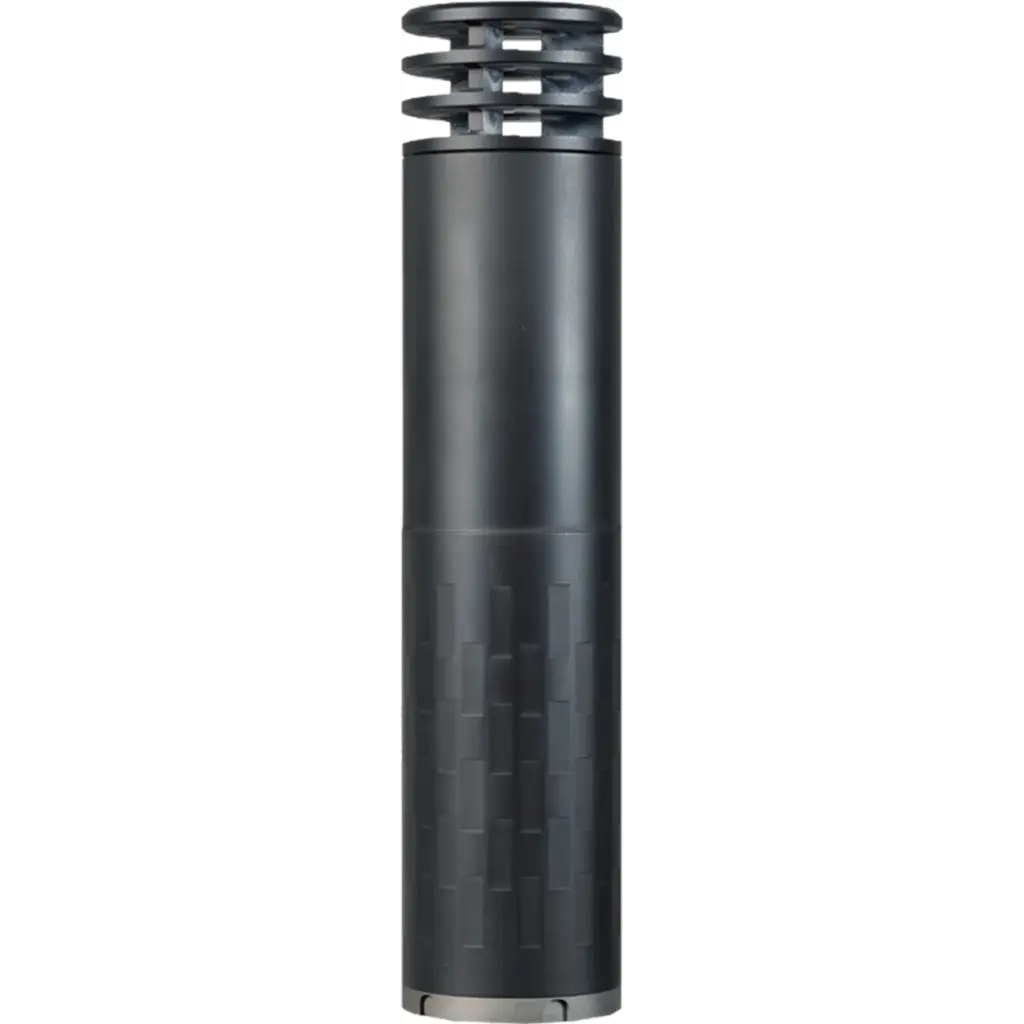
SilencerCo
SilencerCo offers a variety of conventional suppressor designs, including the Omega family. These products illustrate the importance of discussing caliber ratings, mounting options, and intended use rather than treating every rifle suppressor as interchangeable.
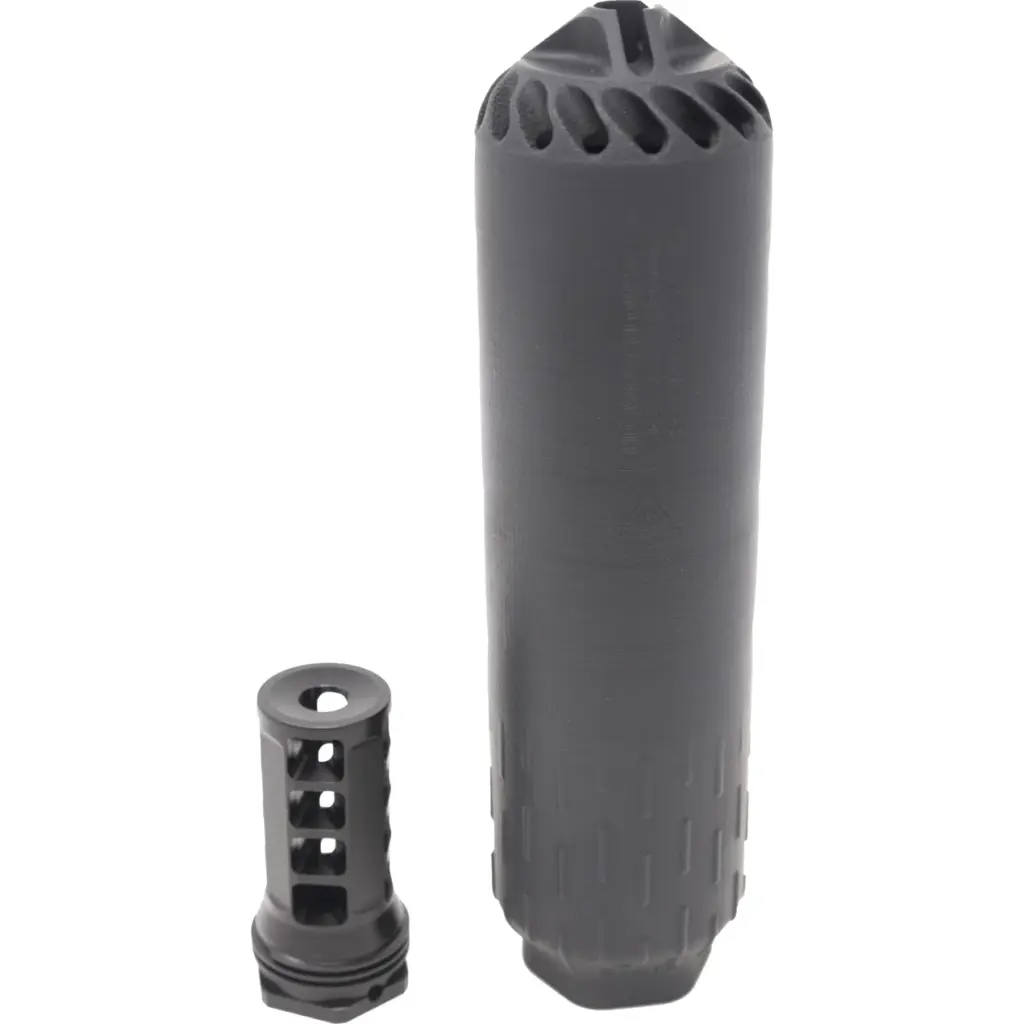
HUXWRX
HUXWRX is well known for its FLOW-Through technology. Its designs provide a useful example of how manufacturers approach gas management and reduced backpressure, particularly for semiautomatic firearms.
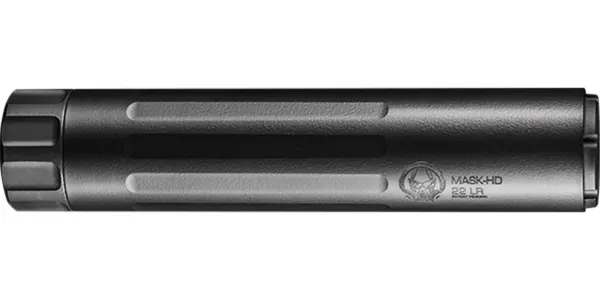
Dead Air Silencers
Dead Air’s Mask series is a useful example when discussing rimfire suppressors. It provides an opportunity to educate customers about maintenance, fouling, and the advantages of user-serviceable designs.
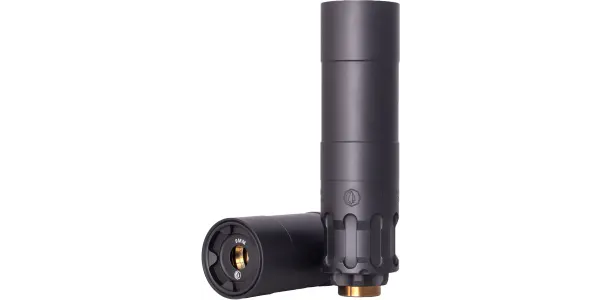
Rugged Suppressors
Rugged’s Obsidian family illustrates the additional considerations involved with pistol suppressors, including mounting systems, host compatibility, and configurable suppressor lengths.
These examples are not intended to establish which company produces the quietest suppressor. Instead, they demonstrate why dealers should become familiar with different engineering philosophies and product applications.
A customer looking for a lightweight hunting suppressor may have very different priorities from someone interested in a dedicated rimfire suppressor or a model intended for use on a semiautomatic rifle.
The Top 4 Things to Ask When Buying a Suppressor
This is perhaps the most important section for dealers to share with customers. Rather than immediately recommending a particular model, encourage customers to ask four questions.
01
What firearms and calibers will I use it with?
Compatibility should always come first. Customers need to consider caliber ratings, barrel-length restrictions, mounting systems, and whether the suppressor is approved by the manufacturer for their intended firearm. A model suitable for one rifle may not be appropriate for another.
02
What matters most: sound reduction, weight, or gas management?
There is no single suppressor that is automatically the best choice for every shooter. A hunter may prioritize low weight, while an owner of a semiautomatic rifle may be particularly concerned with gas blowback. Understanding the customer’s intended use is essential.
03
What maintenance, warranty, and support does the manufacturer offer?
Customers should understand whether the suppressor is user-serviceable, what cleaning procedures are recommended, and what the warranty covers. Manufacturer support can be particularly important for a product intended to provide many years of use.
04
What is the total cost and legal process of ownership?
Customers should understand the complete purchase price, including required mounts, accessories, and any applicable taxes or transfer charges. Dealers should also explain the current federal and state legal requirements, the ATF approval process, and when the customer can legally take possession.
For 2026, dealers should be particularly careful to distinguish the federal transfer-tax amount from the federal registration and approval requirements. A zero-dollar transfer tax for eligible suppressors does not, by itself, eliminate the National Firearms Act process. Dealers should verify current ATF guidance and applicable state law before quoting transfer requirements or timelines.
Building Customer Confidence Through Education
One of the biggest mistakes a dealer can make is assuming that a customer already understands suppressor technology.
Someone may have spent years shooting rifles and handguns without ever owning a suppressor. Another customer may have watched dozens of online videos but still have an unrealistic expectation of what a suppressor can accomplish.
A knowledgeable dealer can help both customers.
For stores looking to improve their suppressor sales experience, a simple educational display can be extremely useful.
Consider placing a manufacturer-supplied cutaway model or clearly labeled demonstration display near the suppressor counter. Customers are naturally curious about what is inside these products, and visual examples make the discussion easier.
A printed comparison sheet explaining suppressor materials, mounting options, sound testing, maintenance, and caliber compatibility can also help sales associates answer questions consistently.
Just as important, sales staff should be familiar with the manufacturer’s published specifications and limitations. When an employee is unsure whether a particular suppressor is compatible with a customer’s firearm, the correct answer is to verify the information rather than guess.
The Future of Suppressor Technology
Suppressor technology continues to evolve, and one of the more interesting developments is the growing use of additive manufacturing.
Advanced manufacturing methods allow companies to produce complex internal structures that would be difficult or impractical to manufacture using some traditional processes.
This has opened the door for new approaches to gas management, weight reduction, and structural design.
At the same time, traditional baffle systems remain relevant. A well-engineered conventional suppressor can still provide excellent performance, and there is no reason to assume that newer technology automatically makes every previous design obsolete.
For dealers, the important lesson is to stay educated.
The suppressor market is no longer a category where customers should be expected to make a decision based solely on brand recognition or price.
Understanding the differences between products, and knowing how to explain those differences in plain language, can help dealers establish themselves as trusted sources of information.
Knowledge Is One of the Best Tools Behind the Counter
The anatomy of a suppressor is more than a collection of metal components. It represents years of engineering, experimentation, and technological advancement aimed at managing the tremendous energy released every time a firearm is discharged.
For the average customer, understanding every detail of suppressor engineering is not necessary.
For the dealer, however, understanding the fundamentals can make a tremendous difference.
Knowing why one suppressor is lighter, why another produces less backpressure, or why a particular model requires more frequent cleaning allows the dealer to answer questions with confidence.
And that confidence is important.
A customer who understands what they are purchasing is more likely to have realistic expectations, use the product appropriately, and return to the same dealer when they have additional questions.
As suppressor technology continues to advance, the dealers who invest in product knowledge will be better prepared to serve an increasingly educated customer base.
In an industry where technology is constantly changing, education remains one of the most valuable things a firearms dealer can offer.