
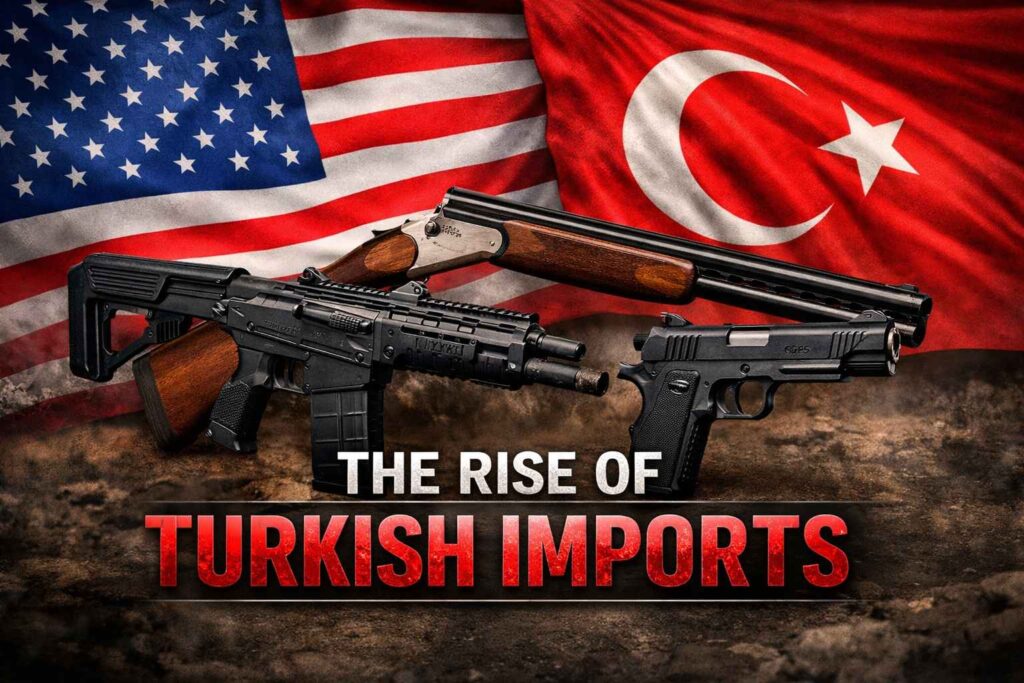
Walk into almost any retail gun store today and one trend is clear: Turkish imports have carved out serious shelf space. What started as a budget-shotgun niche has matured into a competitive category that now influences pricing, feature expectations, and dealer strategy across multiple segments.
For dealers, this isn’t just a product trend — it’s a margin, inventory, and customer-experience conversation.
Let’s break it down from the retailer’s perspective.
Why Turkish Imports Matter to Dealers
1. They Fill the “Value Gap” in a Soft Market
When discretionary spending tightens, consumers don’t stop buying — they trade down.
Turkish-made firearms allow dealers to:
-
Maintain sales volume at lower price points
-
Offer feature-rich products without premium-tier pricing
-
Capture first-time buyers who might otherwise walk out
Importers like SDS Arms, G-Force Firearms, and Dickinson Firearms have built lineups that give dealers solid entry-level anchors in categories like:
-
Tactical and semi-auto shotguns
-
Budget O/U and field shotguns
-
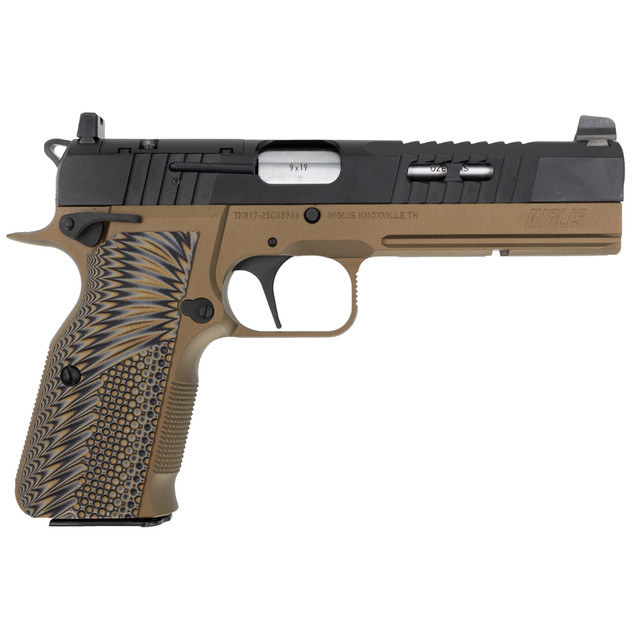
1911-style pistols and other value handguns (in some importer portfolios)
For many stores, these products represent fast turns and approachable price tags, especially when higher-end inventory is sitting.

The Margin Conversation
Let’s be candid: one of the biggest reasons these imports have staying power is margin flexibility.
Lower landed costs give dealers:
-
Room for competitive pricing
-
Promotional opportunities
-
Bundle strategies (ammo, accessories, optics, etc.)
In a competitive local market, being able to advertise a feature-loaded shotgun under a key price threshold can drive foot traffic that converts into additional sales.
But margin only works when post-sale friction stays manageable.
The Reality Check: Where Dealers Get Burned
Turkish imports can be profitable — but they can also eat time and reputation if not managed correctly.
1. Warranty & Service Friction
Every dealer has seen it:
-
Customer brings back a gun that won’t cycle.
-
Customer expects an immediate exchange.
-
Store policy says warranty-only.
The issue isn’t necessarily defect rate — it’s expectation management.
Some importers provide solid support. Others may have:
-
Slower turnaround times
-
Limited parts inventory
-
Communication gaps
When that friction happens, customers rarely blame the overseas factory.
They blame the dealer.
2. Parts & SKU Turnover
Model churn is real in the import space.
A model that sells well this year may:
-
Be slightly redesigned next year
-
Switch factories
-
Disappear entirely
That affects:
-
Magazine availability
-
Replacement parts
-
Accessory compatibility
Dealers who treat these like “long-term ecosystem guns” (e.g., Glock, Mossberg, Remington-level parts ecosystems) may run into trouble.
3. Brand Perception Management
There’s still a segment of the customer base that views Turkish imports as:
-
“Budget guns”
-
“Range toys”
-
“Hit or miss”
That perception may or may not be fair — but it exists.
Dealers need to control the narrative:
-
Position them correctly (value-driven, feature-rich options)
-
Avoid overselling them as premium-tier equivalents
-
Set performance expectations appropriately
Strategic Advantages for Dealers Who Handle It Right
If managed well, Turkish imports can be a powerful part of a store’s product mix.
They Attract First-Time Buyers
New shooters are price-sensitive. A lower-cost entry point helps bring them into your store rather than a big-box competitor.
They Move During Slow Cycles
When premium firearm sales cool, value-tier firearms often maintain velocity.
They Pair Well with Add-Ons
Lower firearm cost can mean:
-
More room in the customer’s budget for optics
-
Extra magazines
-
Ammo
-
Cleaning kits
-
Safes
That increases ticket size without increasing gun price.
Best Practices for Dealers Carrying Turkish Imports
1. Know the Warranty Inside and Out
Before stocking a line, make sure staff can answer:
-
Is it lifetime or limited?
-
Who pays shipping?
-
Is the dealer expected to facilitate warranty claims?
-
Is there a dedicated service department in the U.S.?
If your counter staff can’t explain the warranty confidently in under a minute, that’s a problem.
2. Set Return Policies Clearly
Be explicit at point of sale:
-
Firearms cannot be returned after transfer (unless store policy differs).
-
Defects are handled through the manufacturer/importer.
-
Ammo sensitivity may exist with certain models.
Clarity prevents conflict.
3. Stock Common Wear Parts (When Possible)
If magazines or high-turn parts are available, consider carrying them.
Nothing frustrates a customer more than:
“I bought it here but can’t get mags anywhere.”
Even small parts inventory can build loyalty.
4. Train Staff to Sell Them Honestly
The script shouldn’t be:
“It’s just as good as a $1,200 gun.”
It should be:
“It gives you these features at this price point, and here’s what to expect.”
Expectation alignment reduces post-sale friction dramatically.
Where the Market Is Headed
Turkish manufacturing quality has improved significantly over the last decade. CNC machining, finish quality, and overall consistency are noticeably better than early import waves.
Are they replacing premium-tier brands?
No.
Are they permanently embedded in the U.S. value and mid-tier market?
Absolutely.
For dealers, the opportunity isn’t about choosing sides — it’s about:
-
Balancing inventory tiers
-
Protecting reputation
-
Managing customer expectations
-
Leveraging margin without absorbing service headaches
The Bottom Line for Retailers
Turkish imports are not a gamble — they’re a business tool.
Used strategically, they can:
-
Drive traffic
-
Improve turns
-
Capture budget-conscious buyers
-
Boost accessory sales
Handled carelessly, they can:
-
Create warranty friction
-
Increase counter time
-
Erode trust
The key isn’t whether to stock them.
The key is whether you stock them intentionally.
To dealer purchases visit www.davidsonsinc.com
For consumer purchases visit www.galleryofguns.com