Over the years, I have reviewed suppressors through programs such as Silencer Shop’s former Sponsored Shop Authority program, through Gears of Guns, and now for manufacturers and dealers looking to better understand how suppressors perform and how they can be marketed to customers. As a dealer myself, I spend a significant amount of time evaluating suppressors, yet I rarely discuss the handgun that serves as my primary testing platform.
That changes today.
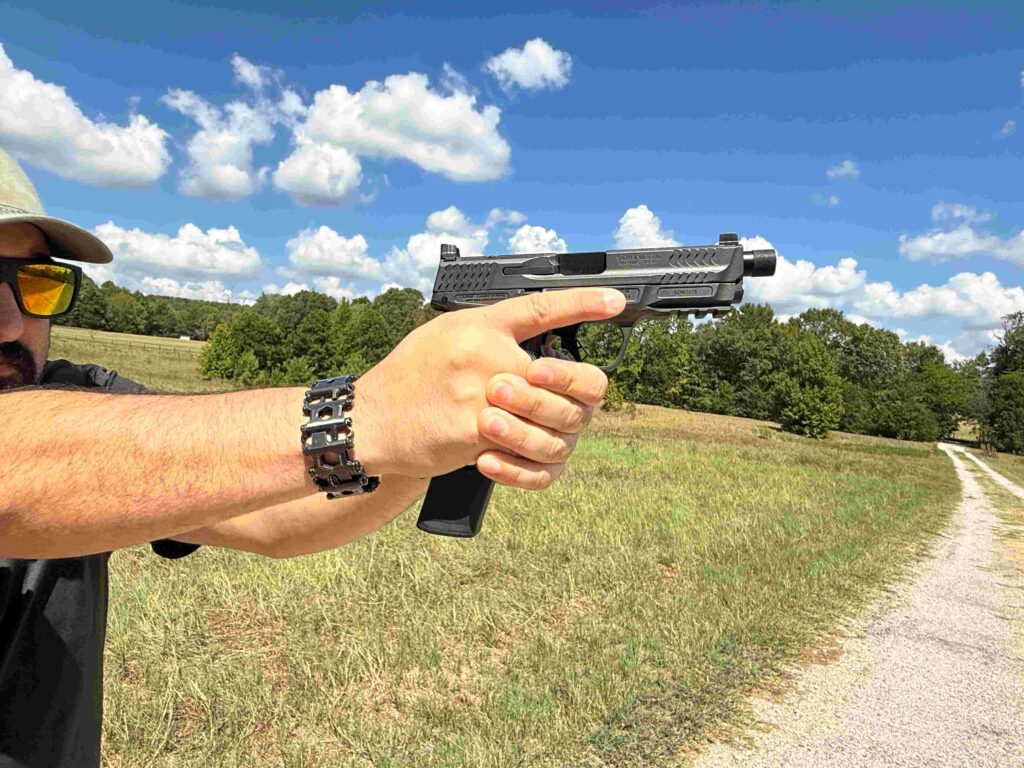
I wanted to give you a detailed look at why I have decided to focus primarily on the Smith & Wesson M&P 2.0 Metal Threaded and why it has earned a permanent place in my testing lineup.
Smith & Wesson M&P 2.0 Metal Specifications
Before getting into why I use this pistol, let’s start with some basic but important specifications.
This particular model features the gray finish and includes:
- Aluminum frame
- Two 17-round magazines
- Factory threaded barrel
- No manual safety
- Optics-ready slide
- High suppressor-height sights
- 4.6-inch barrel
- Full-size frame
- Front and rear slide serrations
- Interchangeable palm swell grips
- Flat-face trigger
- Picatinny accessory rail
- Aggressive grip texture
- Reversible magazine release
While I personally have no use for the reversible magazine release because I am right-handed, it is a nice feature for those who prefer a different configuration.
The trigger is one of the highlights of the pistol. It offers a crisp break, a predictable reset, and a lighter feel than many striker-fired handguns on the market.
Despite utilizing a metal frame, the pistol weighs approximately 30 ounces, which is a very comfortable weight. That additional mass helps absorb recoil, especially when shooting suppressed. As a result, the gun remains enjoyable to shoot for extended periods of time.
Why Consistency Matters in Suppressor Testing
I own multiple 9mm handguns that make excellent suppressor hosts and range toys. However, when it comes to reviewing suppressors, consistency matters more than variety.
If I switched firearms every time I reviewed a suppressor, comparing performance from one suppressor to another would become much more difficult. The goal is to eliminate as many variables as possible.
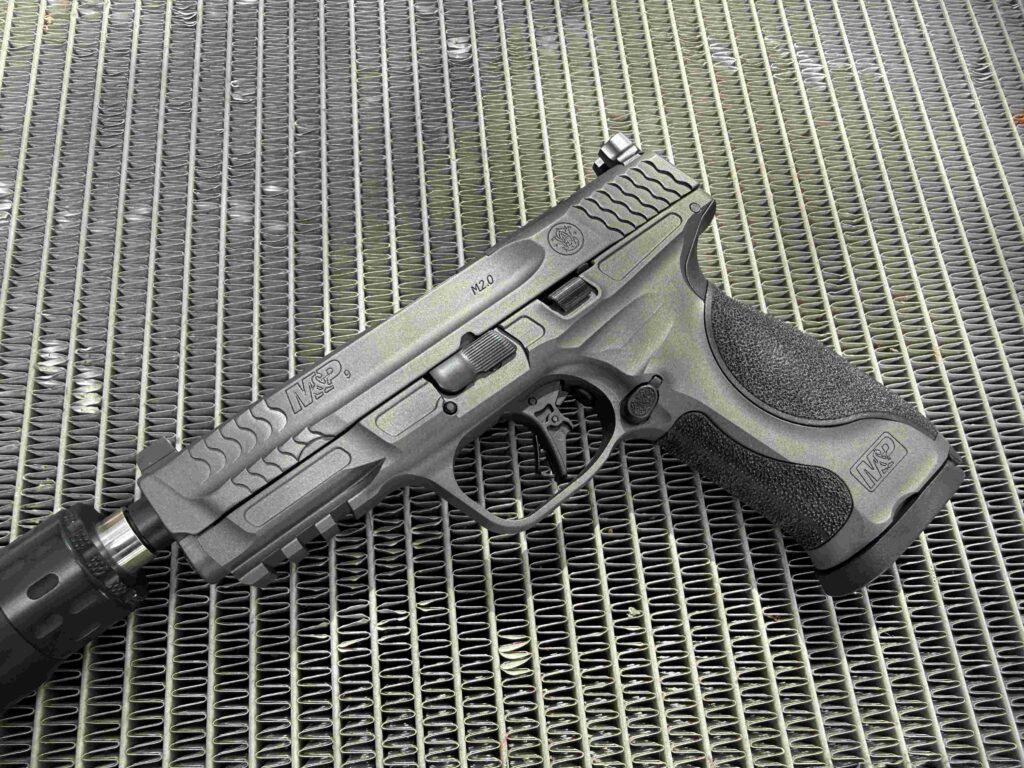
A dedicated suppressor testing platform must possess several critical characteristics:
- Reliability
- Accuracy
- Consistent cycling
- A threaded barrel
- Comfortable ergonomics
- Compatibility with a wide range of ammunition
Whether the threaded barrel is factory-installed or aftermarket is less important than having a reliable setup. In this case, Smith & Wesson provides a factory threaded barrel, which was a major advantage for me.
The host gun should disappear into the background of the review. My focus needs to remain entirely on the suppressor. After years of reviewing suppressors, the firearm should not be generating questions about malfunctions, inconsistencies, or unexpected issues.
When I notice a point-of-impact shift, I want confidence that I am evaluating the suppressor and not questioning whether the handgun is introducing variables. Ammunition can certainly influence results, as different loads behave differently, but I want to remove as many outside factors as possible.
Right out of the box, the M&P 2.0 Metal has delivered exactly what I was looking for.
First Impressions of the M&P 2.0 Metal
The M&P 2.0 Metal is exactly what the name implies, a metal-framed striker-fired pistol.
For years, the striker-fired market has been dominated by polymer-frame handguns. Polymer offers plenty of advantages, including reduced weight and lower cost. Even so, there is something reassuring about a metal-framed handgun.
The aluminum frame gives the pistol a solid feel that many polymer guns simply do not replicate. It feels substantial without becoming excessively heavy.
Balance is one of the first things I noticed.
The pistol sits low in the hand and naturally helps reduce muzzle rise during firing. Once a suppressor is attached, that balance becomes even more important. The gun shoots exceptionally flat, and the combination feels purpose-built.
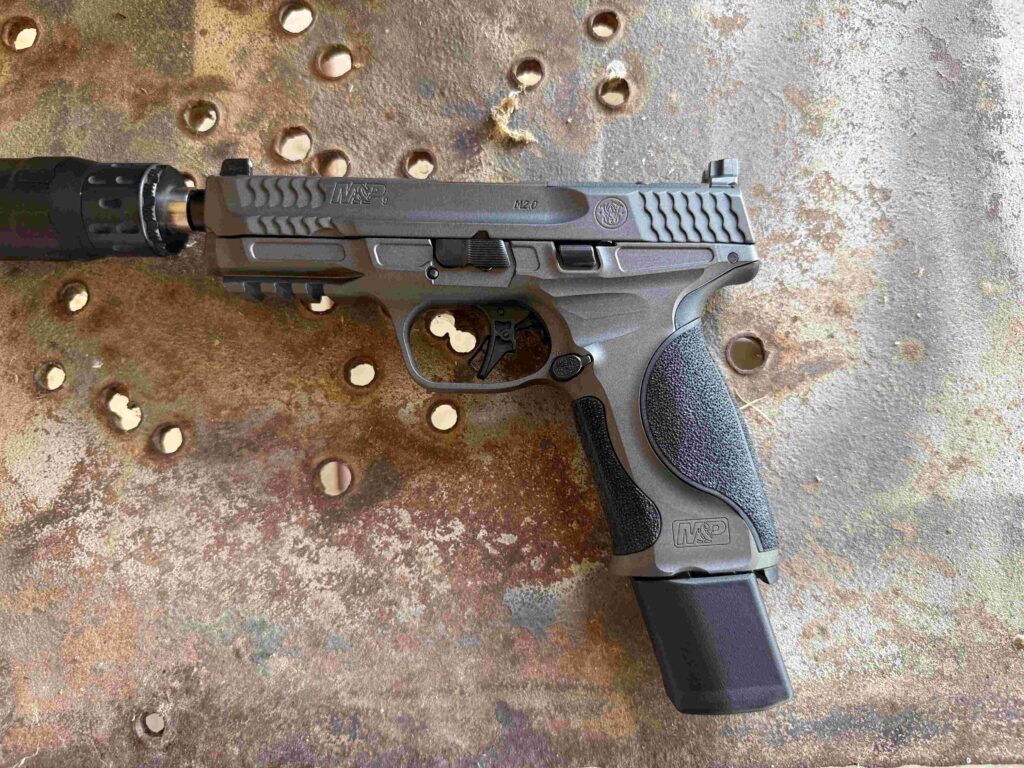
Many polymer-frame pistols become noticeably front-heavy when a suppressor is installed. The additional weight of the metal frame helps offset that suppressor weight and creates a much more balanced shooting experience.
For a suppressor host, that matters.
Why the Factory Threaded Barrel Mattered to Me
The factory threaded barrel was an important factor when selecting this platform.
There are countless aftermarket threaded barrels available. Some offer unique colors, weight reduction cuts, coatings, or other enhancements. Those options certainly appeal to many shooters.
My preference was different.
I wanted a barrel built and fitted by Smith & Wesson. The company has spent decades producing firearms with proven durability, reliability, and consistency. Those qualities are exactly what I want from a dedicated testing platform.
Throughout my experience with Smith & Wesson firearms, I have consistently found excellent fit, reliable performance, and dependable manufacturing standards.
That level of consistency is invaluable when evaluating suppressors.
Reliability Above Everything Else
Reliability is non-negotiable.
I do not want to see malfunctions caused by the handgun itself. If an issue occurs, I need confidence that it may be related to the suppressor, ammunition, or another test variable rather than the firearm.
Fortunately, the M&P 2.0 Metal has proven exceptionally dependable.
Whether shooting 115-grain ball ammunition or 147-grain subsonic suppressor ammunition, the pistol simply works.
No modifications have been necessary.
No tuning has been required.
Nothing has needed adjustment.
The gun cycles reliably and consistently regardless of what ammunition I feed it.
For a suppressor testing platform, that reliability is invaluable.
A Trigger Worth Talking About
Enjoyment still matters, even when conducting reviews.
While the Glock trigger is not a bad trigger by any means, there are certainly better options available.
Modern M&P triggers have improved dramatically compared to earlier generations. The trigger found in the M&P 2.0 Metal offers a clean break, a predictable reset, and a refined feel straight from the factory.
At no point have I felt the need to upgrade the trigger.
Everything feels crisp, clean, and well-sorted.
The overall shooting experience reflects a level of refinement that you expect from a premium handgun rather than a budget-oriented firearm.
Price and Value
MSRP on this pistol sits around $950.
At first glance, that can seem expensive compared to many striker-fired polymer pistols.
However, it is important to consider what comes included:
- Metal frame
- Optics-ready slide
- Factory threaded barrel
- Suppressor-height sights
- Enhanced trigger
Those features add value and contribute to the overall cost.
Fortunately, street pricing is often significantly lower. Online pricing can be found around the $780 range, which still places the pistol in the premium category but makes it much more competitive.
In my opinion, it is not overpriced.
Magazine Compatibility and PCC Integration
One feature I appreciate is how well this platform integrates with my pistol-caliber carbines.
When I transition to a PCC for suppressor reviews, I typically reach for one of two firearms.
The first is my purpose-built full-auto 9mm PCC that uses Glock magazines and serves as my heavy-duty testing platform.
The second option is my Smith & Wesson Response.
We have already reviewed the Response on Gears of Guns, and one of its strongest features is its interchangeable magazine well system.
Users can switch between:
- Smith & Wesson M&P magazines
- Glock magazines
- Sig Sauer P320 magazines
That flexibility allows shooters to standardize magazine usage across multiple firearms.
The Response includes two 23-round M&P magazines. Combined with the 17-round magazines from the M&P 2.0 Metal, I have plenty of ammunition capacity available during testing sessions.
Although M&P magazines are not as common or inexpensive as Glock magazines, they have proven extremely reliable.
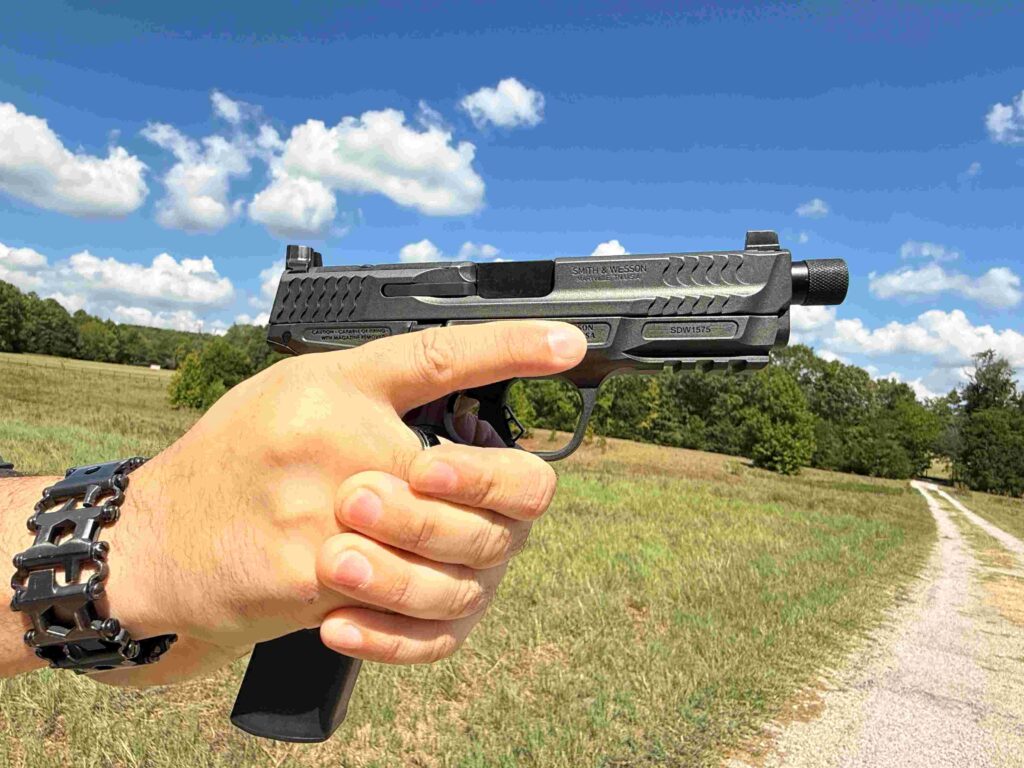
Magazine tracking is something we take seriously during reviews.
Most magazines used in testing receive identifying marks, whether through colored electrical tape, paint markers, or written numbers. This allows us to determine whether a malfunction is related to a specific magazine or another component.
Across my testing experience with Smith & Wesson magazines, I have never encountered a recurring magazine-related issue.
That level of consistency inspires confidence.
Why I Prefer It Over the Glock 17
Now let’s address the obvious question.
Why choose the Smith & Wesson M&P 2.0 Metal over the Glock 17?
The Glock 17 is one of the most successful handguns ever produced.
Its reputation is well earned.
The platform is durable, reliable, and supported by one of the largest aftermarket industries in the firearm world.
Even with all of those advantages, I still prefer the M&P 2.0 Metal.
The ergonomics fit my hand better.
Grip texture is superior.
Interchangeable backstraps allow additional customization.
Trigger quality is noticeably improved.
Recoil management feels better.
Overall balance is superior when running a suppressor.
Most importantly, the gun simply fades into the background during testing.
That is exactly what I want.
The purpose of a suppressor review is to evaluate the suppressor, not the handgun. While the M&P 2.0 Metal is an excellent shooter in its own right, its greatest strength in this role is how effectively it allows the suppressor to remain the focus.
Dependable performance, excellent balance, enjoyable shooting characteristics, and consistent reliability all combine to make the handgun almost invisible during testing.
That is a compliment.
The Biggest Drawback
No firearm is perfect.
The biggest downside to the M&P 2.0 Metal is cost.
It is more expensive than a Glock 17.
It is more expensive than a standard polymer-frame M&P 2.0.
That reality does not bother me.
Higher-end products often cost more because they offer a different experience.
A Honda Civic serves as an excellent daily driver. A Lamborghini provides a different level of refinement and performance. Neither vehicle is inherently wrong. They simply serve different purposes.
The same principle applies to firearms.
I own an F-250 because it can tow my trailer and sailboat. At the same time, I prefer a fuel-efficient vehicle for everyday driving.
Each tool has a purpose.
For me, the M&P 2.0 Metal fills its role beautifully as a suppressor testing platform.
Could it serve as a carry gun or general-purpose handgun?
Absolutely.
Does every shooter need one?
Probably not.
Still, when the goal is suppressor testing and eliminating variables while maintaining a comfortable and enjoyable shooting experience, the M&P 2.0 Metal Threaded is difficult to beat.
How Dealers Can Sell This Gun to Customers
When customers first see the price tag, many immediately ask why they should buy this pistol instead of a less expensive polymer-framed handgun.
That is where handling the firearm becomes important.
The weight and balance are immediately noticeable.
Once customers hold the gun, many begin to understand what sets it apart.
The metal frame helps control recoil and improves follow-up shots. Add a suppressor, and the balance becomes even more impressive.
Rapid strings of fire remain controlled, and sights return naturally to target.
Additional selling points include:
- Aggressive grip texture
- Interchangeable backstraps
- Factory optics-ready slide
- Suppressor-height sights
- Factory threaded barrel
- Excellent trigger
- Metal-frame construction
Those features help justify the premium price point.
Customers are not simply paying more money for the sake of spending more money. They are purchasing a handgun that offers a distinct feel and performance advantage.
Final Thoughts
It is difficult to summarize this pistol because I feel I have already explained throughout the review exactly why it has become my preferred suppressor host.
Simply put, this gun works.
For me, as someone who spends a tremendous amount of time reviewing suppressors, the M&P 2.0 Metal Threaded delivers everything I need from a testing platform.
The pistol is reliable.
The trigger is excellent.
Balance is outstanding.
Magazine performance has been dependable.
The factory threaded barrel eliminates unnecessary variables.
Most importantly, the gun disappears into the background and allows me to focus entirely on the suppressor being reviewed.
That is exactly what I want from a dedicated suppressor host.
As long as it continues performing the way it has, the Smith & Wesson M&P 2.0 Metal Threaded will remain my go-to suppressor testing platform and the handgun I rely on to help deliver the best suppressor reviews possible.
For dealer purchases, visit www.davidsonsinc.com
For consumer purchases, visit www.galleryofguns.com