The state of the art in concealed carry pistols has evolved over the years. Not so long ago, everyone knew that the best defensive pistol you could buy was a snub-nosed revolver in .38 Special. Then everyone decided that we should be carrying 1911’s chambered in .45 ACP. Then it was Glocks with at least 15 rounds of 9mm in a magazine. Finally, about 20 or so years ago, the micro-compact 9mm pistol came on to the scene and quickly grew in popularity.
The timing couldn’t have been better for this sort of pistol. Concealed carry laws were being liberalized all across the country, and people started looking for guns to carry concealed. Because a micro-compact 9mm prioritizes compact size over the other features found in a defensive pistol, it fit this role very nicely.
Let’s pause for a moment to talk about those other features. Let’s begin with the fact that there is no one “perfect” pistol for concealed carry. Everyone has a unique blend of lifestyle, clothing and body dimensions, so what might work for Person A will not work for Person B.
Secondly, defensive pistols are a compromise of three things: Concealability, Accuracy and Firepower. Concealability is determined by the gun’s size and weight, with the height (the distance from the top of the slide to the bottom of the grip) being most important. Accuracy is a relative term, but in general, heavier, bigger and heavier pistols tend to be more accurate than smaller pistols. Firepower is an ambiguous way of describing how much hurt you can send downrange in one given serving. Snub-nosed revolvers and pocket pistols tend to do poorly here, as they have a limited number of rounds and what they have tends to be underpowered.
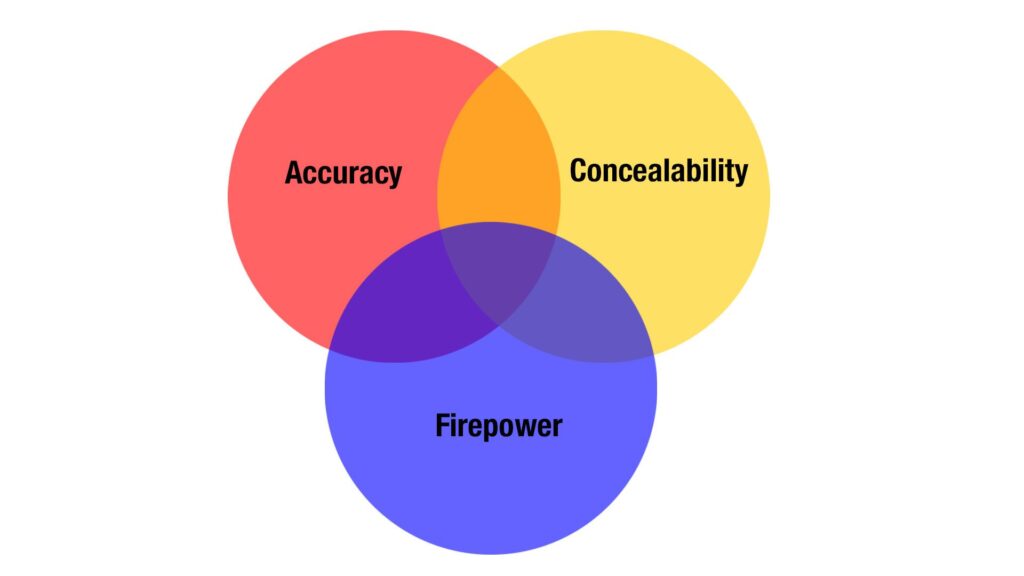
A compact 9mm pistol tends to do the best job at balancing these three elements. With barrels slightly under four inches, they are easily concealed with a good holster, have at least a 25 yard effective range and usually hold around 15 rounds of 9mm ammunition or the equivalent amount in other calibers.
However, for some people, even a compact pistol can be a bit hard to carry on a day in, day out basis. As a result, micro-compact pistols with barrels of around three inches and magazine capacities of 12 or so rounds have become very popular over the past half-dozen years.
These pistols move the need in favor of concealability over firepower and accuracy, and that’s a good thing. A 2021 Georgetown University study showed that 81.9% of the time, just having a gun and bringing it into play was enough to end a violent criminal encounter, so whatever we can do to have an adequate means of protection with us whenever possible is a good thing, which is why micro-compact pistols are more and more popular.
I started my concealed carry journey with a micro-compact pistol, an original Smith & Wesson Shield in 9mm. I used that pistol in a Massad Ayoob MAG40 class and was able to shoot in the top third of the class with that smaller gun. I switched to a Glock G19 around five years ago, and from there I went to a 9mm Commander-sized 1911 and then a compact HiPower clone from EAA.
However, in the past few months, I have decided to return to my micro-compact roots and carry a Smith & Wesson CSX E-Series 9mm pistol with a 3.1-inch barrel. I became addicted to the short, light and crisp trigger pull of a single-action pistol when I carried a 1911, and I wanted to combine that great trigger pull with something that was easy to carry everywhere I could legally carry a pistol.
The CSX E-Series scratches both of those itches. It can be used with a 12-round, flush-fit magazine which is super-easy to conceal, but can also use magazines with 15 rounds and 17 rounds for even more peace of mind.
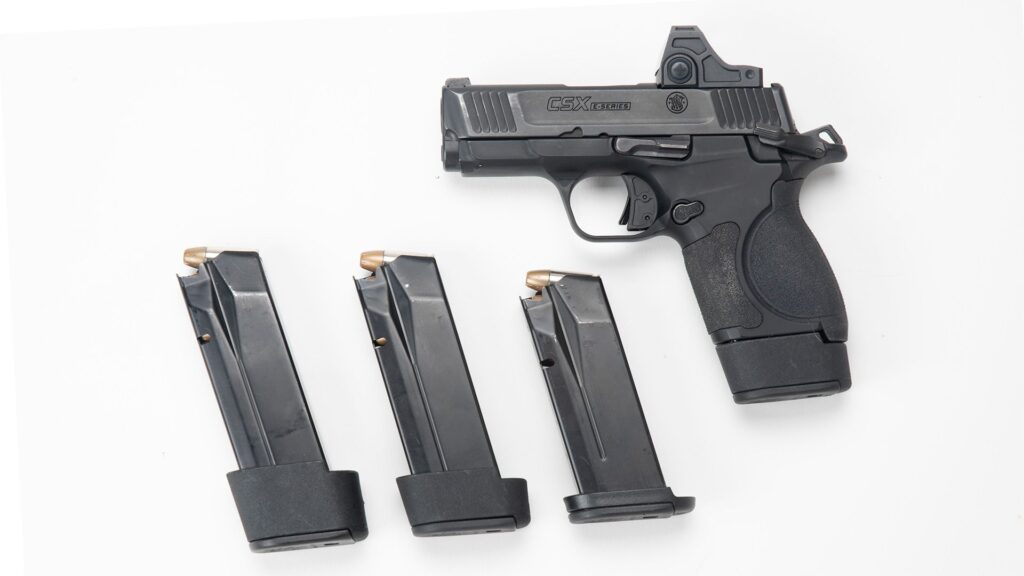
The small size of the CSX (it’s just 4.6 inches tall without a dot sight on it) and its light weight make it easy to carry, but those larger-capacity magazines mean it’s capable of use for longer periods of time without reloading. In addition to this, the E-Series CSX models are compatible with red dot optics. As a result, in exchange for a slight increase in size, 25 yard shots become much easier to accomplish.
What do you lose when using a micro-compact pistol compared to a larger gun? The mass and physical size of a larger gun make it easier to control during the trigger press and much easier to control under recoil. A larger gun gives you more gun to hang on to during both the trigger press and under recoil, further enhancing those two metrics.
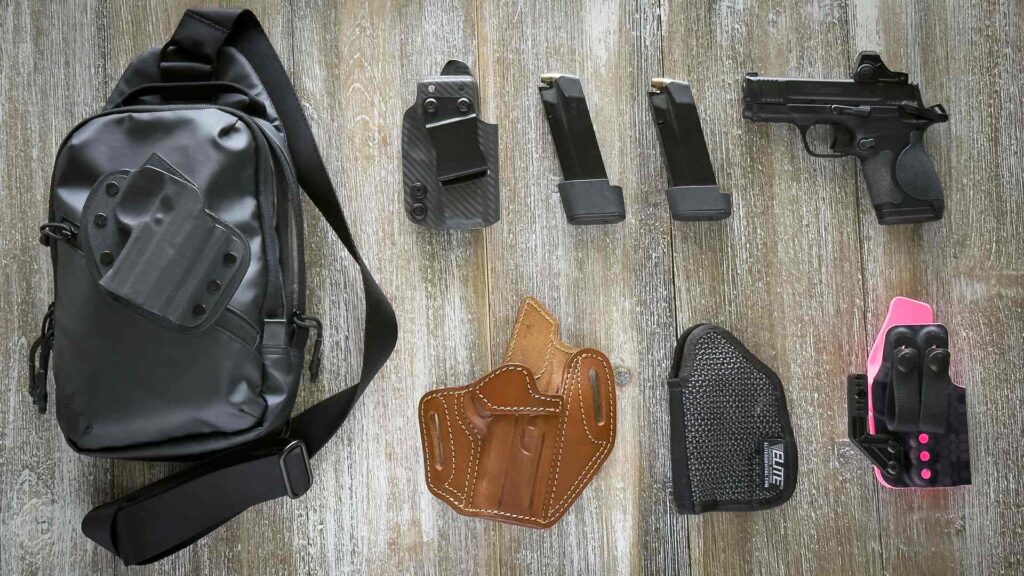
When it comes to actually carrying your gun, though, there are some distinct advantages to a smaller pistol. The small size makes them easy to conceal and gives you a wide range of carry options.
For starters, there is pocket carry. I have carried my CSX E-series in a Mission First Tactical Mainstay holster nestled inside the front pocket of a pair of dress khakis for weeks on end. Yes, the Gideon Optics red dot sight on top of my pistol means I need to take particular care with my draw in order to avoid snagging the sight on my pocket. However, I can perform a fast draw on-demand with that pistol from the pocket, which is a marked improvement in firepower over smaller pocket guns.
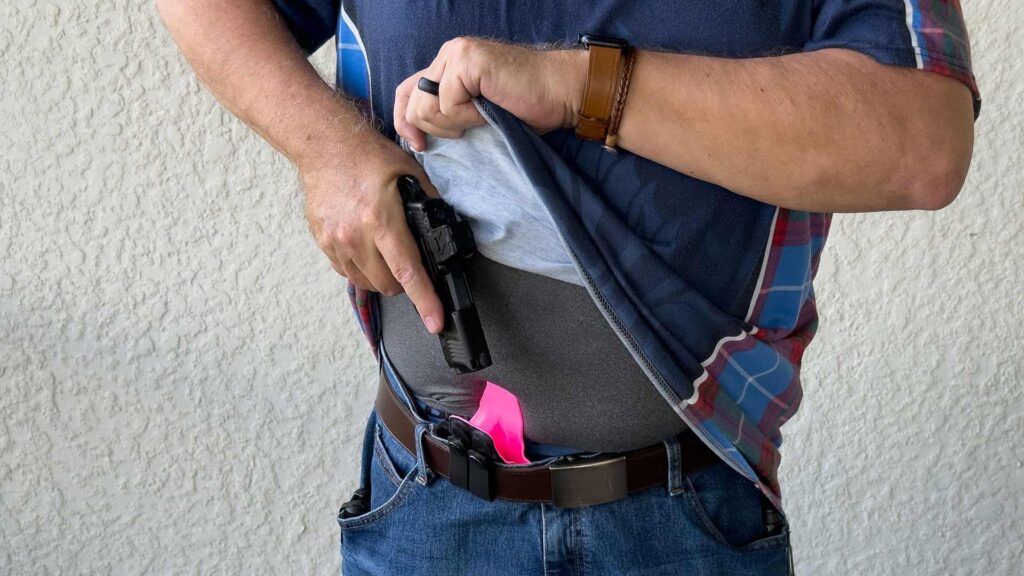
Secondly, I can carry the CSX in a conventional holster, either OWB (Outside The Waistband), IWB (Inside The Waistband) or Appendix (AIWB) carry. Because the E-Series CSX is an update of a previous version and is backwards-compatible with those holsters, I have plenty of options available for me, no matter where I choose to position it on my body.
The small size of the CSX opens up another option for concealed carry: Off-body carry. While many consider this to be an unacceptable answer to the problem of having a pistol with you every day, the fact is, for many people, it’s the easiest way to have a pistol near them when it might be needed.
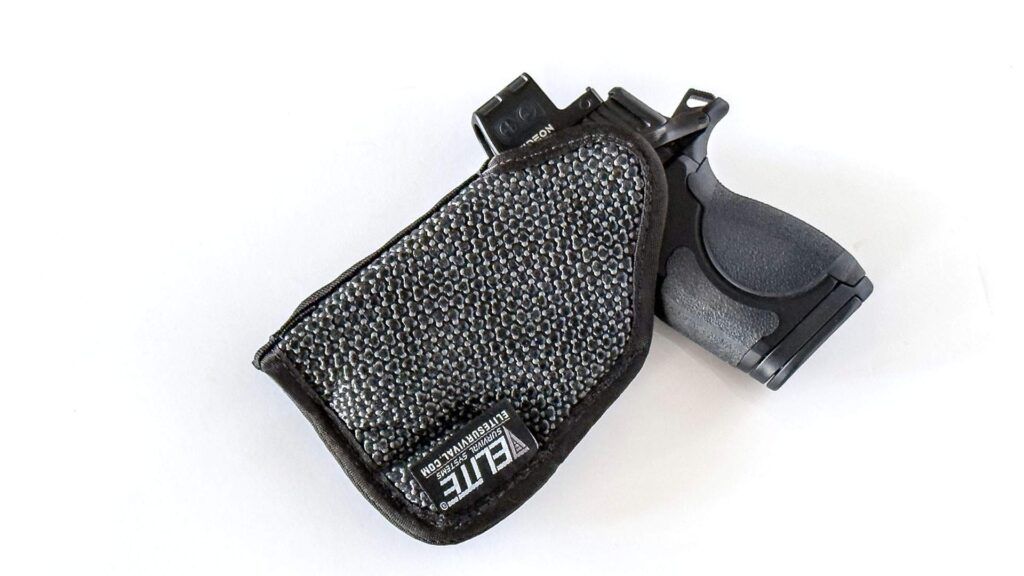
There are some drawbacks to off-body carry, such as weapon retention and a slower draw stroke. Also, the bag or case which contains your pistol has to be as near and dear to you as the suitcase with the nuclear launch codes is to the President. It has to go with you everywhere you do, even to the restroom, because you don’t want to leave a gun laying around where it can be easily stolen.
Is a micro-compact right for you? Well, that depends if you are willing to give up some measure of accuracy and firepower in exchange for increased portability. If you make that decision, the key to your success won’t be the pistol you choose but the hours of practice you put in at the range.